

Aromatherapy Stress Relief
Aromatherapy stress relief can help both people in need of care and their caregivers
Providing care to a loved one can be so rewarding, however it is also a tough job that can come with a lot of stress. It can be equally stressful to be the person receiving care.
This stress doesn’t only reduce the quality of life for both the caregiver and person receiving care, it also increases the chances of developing serious physical and mental health issues.
Aromatherapy is a simple, drug-free stress management technique that uses the power of scent. It can reduce stress and improve the health and wellbeing of people giving and receiving care.
How scents relieve stress
Scents are powerful. A certain smell can trigger a significant memory, or affect the body’s nervous system.
When you smell something, your olfactory nerve is triggered. It signals the parts of the brain that control emotions, mood, and memory. These parts of the brain also control the autonomic nervous system, which is responsible for your fight-or-flight and relaxation responses.
This explains why scents can cause physical reactions. A research study even showed that lavender essential oil can have a calming effect similar to that of anti-anxiety medications.
Benefits of aromatherapy for people needing care and their caregivers
People needing care and their caregivers can benefit from aromatherapy in many ways, including:
- Reduced stress
- Improved sleep
- Improved digestion
- Reduced pain levels
- Reduced anxiety and depression
For people living with dementia, aromatherapy can help reduce challenging behaviours that are caused by anxiety or mild discomfort.
How to use aromatherapy stress relief at home
Aromatherapy is easy to put into practice. Everyone likes different smells, so start by finding some scents that you enjoy. Then, experiment with different ways of scenting the environment until you find what works best.
Popular scents to relieve stress include:
- Lavender
- Rosemary
- Peppermint
- Ylang-ylang
Aromatherapy with EveryDay Care & Support
Wendy at our Rowan Croft Wellbeing Centre has been using aromatherapy with our customers to great success. Wendy said,
“Our customers at Rowan Croft Wellbeing Centre benefit greatly from our aromatherapy sessions. We have found it is a great sensory tool for reminiscent chats and engaging conversations with our customers. For example, smelling ‘Blackpool rock’ takes them back to their childhood memories of seaside holidays in the UK. Oils such as ‘grass cuttings’ reminds them of Spring approaching and engages them in conversations about Springtime such as spring flowers and seedlings and we can use this topic of conversation to introduce new activities, like our sunflower growing competition and planting our fruit and veg seeds at the beginning of Spring to care for throughout Summer. Some customers can familiarise themselves with a particular smell but may not be able to remember what it is and other customers assist with this which starts a great conversation.
“We have found aroma-therapy oils are inclusive of all our customers and especially those with progressed cognitive impairments such as dementia and those whose conditions are progressing quite quickly. Snuffed tobacco smells can take them back to their childhoods where their fathers or grandfathers may have used this. It can be a sentimental activity and bring out emotion in our customers. Oils that represent ‘Germolene’ we have been told take them back to their childhoods where their mother would apply Germolene to their cuts and bruises after playing out with their friends. Should our customers become anxious or agitated we have found it to be a great calming tool.”
To find out more about our Wellbeing Centres, call us on 0191 287 7028 or click here.
Celebrating Homecare September 22nd
EveryDayCare & Support is honouring its careworkers and recognising their amazing work on 22nd September, by taking part in the first ever ‘Celebrating Homecare’ day, organised by United Kingdom Homecare Association (UKHCA) and the are Care Workers Charity (CWC).
Celebrating Homecare has been launched to celebrate and recognise the amazing work that homecarers provide. Every day of the year, homecare workers support people to live safely and well at home, enabling people to flourish within our communities.
Made With Care
The theme for this year’s inaugural event is ‘made with care’, to celebrate the fantastic relationships that exist between the people who give and receive care, and highlight the many activities they enjoy together. Whether this is crafting, baking, completing a jigsaw or even filming a TikTok, careworkers and the people they support are being encouraged to celebrate something they have made or shared together.
EveryDay Care & Support employs 234 careworkers who support our clients in their own homes, providing enabling, domestic support around the home, personal care, specialist dementia and palliative care. Throughout a very difficult period, they have served an important role as key workers, providing vital support to clients living across North Tyneside and Newcastle.

Making and baking cakes together
Head of Professional Care Services
Head of Professional Care Services Kerry Parker commented “the work that homecarers do often goes unrecognised however at EveryDay we’re very different and celebrate our team’s achievements on an ongoing basis. They provide more than a service to families, customers and their carers- they are truly part of those families”
UK Homecare Association
Jane Townson, CEO of UKHCA commented: “Homecare workers have been a lifeline for many people throughout the past 18 months, showing real selflessness and resilience in providing invaluable support to people in their own homes in incredibly challenging times.
“But the work they do is always important – not just throughout the pandemic. Homecare services benefit all of us: people who receive and give services, their families, health services and our wider communities. “Their roles deserve to be celebrated now, and increasingly into the future.”
Care Workers Charity
Speaking about the celebration, Karolina Gerlich, CEO of the CWC said: “It’s right and proper every so often to take a step back from the day to day and look at what you have achieved.
“Careworkers do such amazing work, bringing companionship, care and comfort to so many people.
“It’s wonderful to have the opportunity to celebrate what they do!”
To find out more about EveryDay Care & Support and the homecare services we provide across North Tyneside and Newcastle please call 0191 2877028 or visit https://everydayuk.org/ .
If you think that your passion for care mirrors our own and you’d like to consider a career in care with real career progression opportunities we’d love to hear from you. Tel: 0191 2877011 .
National Fitness Day 2021
On Wednesday 22 September 2021 National Fitness Day will celebrate its 10th anniversary.
The theme this year is ‘Fitness Unites Us’ and we hope National Fitness Day will encourage older people across North Tyneside to feel inspired to get active. Maybe you’re a carer and could do with some time for yourself an increase in physical activity could provide this.
Keeping physically active in mid-life helps to delay the onset and progression of many age-related health conditions and plays an important role in helping to manage the impact of health conditions once we develop them.
Despite its importance, levels of physical activity begin to drop in mid-life. This is also true for active travel – that is, walking and cycling for everyday journeys. Although it is one key approach to building regular physical activity into daily life, people in mid and later life are less likely to participate in active travel than younger age groups.
For individuals who have already developed a health condition, physical activity can help them manage their condition and maintain their functional ability, their independence and their quality of life as they grow older. Yet the proportion of people who are physically inactive generally increases with age, with activity levels beginning to drop in people around the age of 50.
Research
The latest data estimates that about a quarter of adults aged 55-74 are currently inactive, meaning they are doing less than 30 minutes of physical activity per week. This rises to nearly half of all adults aged 75 and over.
Active Travel
Active travel – walking or cycling for everyday journeys that get us from place to place – is one key approach to increasing levels of physical activity. Active travel offers a convenient and accessible way to build routine physical activity into our lives outside of our leisure time. Yet people in mid and later life are less likely to participate in active travel compared to younger age groups, and this trend becomes more pronounced with age.
The Centre for Ageing Better commissioned Sustrans to carry out research to understand the barriers and enablers to participating in active travel.
Barriers to active travel
Those involved in the research cited the following barriers to active travel in general:
- Distance, potentially to great in rural locations
- Lack of personal motivation
- The weather
- Their personal safety
- Lack of a previous active travel ‘habit’
- Declining health or disability
For cycling specifically the barriers to active travel were perceived as:
- Fear of motorised traffic
- Lack of confidence
- Poor cycle specific infrastructure
- Drive behaviour and car culture
North Tyneside Environment
The environment we live in is a major factor when considering active travel and the ability to do this.
To enable you to consider cycling or walking in later life why not take a look at the North Tyneside cycling (and walking) map. It is one of 6 in total, covering the whole of Tyne and Wear and South East Northumberland.
Last year Sustrans worked with North Tyneside Council on the North Tyneside plan which included a new coastal cycle and walking route. Additionally they implemented plans to create more space for pedestrians along busy town centre streets.
These include Park View in Whitley Bay, High Street West in Wallsend, Nile Street in North Shields and Front Street, Tynemouth.
If you’ve not cycled before or would like to get back into it and are feeling a little nervous why not take a look at the Cycle Ways 4 All website for sound advice for beginners.
In 2000 North Tyneside Council successfully bid for over £2m worth of funding to transform more than 30 miles of routes as part of the Government’s Liveability Fund.
Our historic 19th century Waggonways network was once used to haul coal to ships on the River Tyne from dozens of coal mines in the borough. They had fallen into disrepair over many years but now create a great cycling and walking route which is flat and so not too strenuous. There are a series of waggonway cycling route brochures which can be downloaded.
When you are feeling more adventurous you could perhaps begin to explore North Tyneside and the top 20 routes are listed on Komoot.
If you’d like to consider becoming more active or maybe someone you care for why not give Age UK North Tyneside a call. Their Healthy Habits team can suggest a programme to support you to make healthier lifestyle choices and their Active Age service will signpost you to local physical activities which will benefit you or your loved one.
or e mail community.development@ageuknorthtyneside.org.uk
Avoiding Carer Burnout
It’s essential that caregivers take care of themselves too.
The secret to surviving long term caregiving is to pace yourself and rest when you feel you need to. Essentially ask for support.
If you as a caregiver feel constantly exhausted and stressed this can lead to serious health issues and decrease your own ability to care.
Unfortunately not all caregivers heed this advice and all too soon feel the weight and burden of caregiving.
Guilt
It’s not unusual for caregivers to feel guilty about stepping away, even for a short time, or they can feel uncomfortable bringing a stranger into their home.
There can also be other factors to getting care support to enable you to take a break.
These can range from the older adult’s denial that they need any help, other family members, or financial concerns.
Considerations
Consider the following to support your own caregiving role.
Accept that you will most likely feel guilty. It’s a normal part of caregiving simply because you care – it will never disappear. You are human after all. This should not stop you from reaching out and accepting the support that you need.
Taking regular breaks is the best way to maintain your own health and your ability to provide good care. Why not consider respite services and wellbeing centres which can provide you with a break from your care giving role. That break could be as little as an hour to enable you to meet with friends or go shopping.
If you’re not physically or mentally well enough to be your loved ones caregiver this will have a huge impact on them and your relationship with them.
Permission
You don’t need permission from anyone to ask for support in your care givers role. This isn’t a decision that your older adult gets to make or anyone else for that matter.
Many older adults can refuse outside help because they’re uncomfortable with the idea. Sadly someone with dementia doesn’t have the cognitive ability to make a rational decision.
If an older adult refuses, they’re not thinking of your needs and are often not considering their own true needs either. That’s why you need to make the decision.
All that matters is that they’re safe and well cared for when you’re not there this will protect your ability to care for them longer term.
Ask for support
It may take some time to find the right person to help and for them to learn the caregiving routines. For this reason it’s always best to reach out and identify support before you need it.
Consider who might form part of the ‘team’ you’ll need around you. That could include family, friends or a paid care service.
Transition into care
To make this transition simpler, you could have a member of that team shadow you until they learn the individual routine and likes then can be left alone with the older adult.
Alternatively someone might come for a short while at first and gradually increase their time as everyone adjusts to the new situation.
Care Packages
Paid care packages can be expensive so don’t discount the support your own family network can offer you. This will allow you to take the break you will so richly have earned. You should contact the North Tyneside Social Care team for advice and to enquire about a paid service initially.
Take a look at the CQC’s website to learn more about any care providers you might consider.
Not a babysitter
Nobody wants to be told that they’re getting a ‘babysitter’ so you may need to be creative when introducing them into your home.
A sensitive approach is especially important to prevent older people with dementia from reacting with fear or anxiety. This could erode your relationship with them. Remember they will always remember how an action made them feel even if the memory itself becomes hazy.
You could consider introducing the person as your domestic and have them help you with meal prep, light housekeeping, and simple care tasks initially.
After a few visits it will seem familiar that they’re around and it will be easier for you to leave to briefly pop away.
You could also position it as doing that person a favour. Perhaps you might suggest that this person is in need of additional income and you’re helping them with a few hours of work.
If family or friends are helping, you could say that they wanted to visit and spend time catching up. When they become regular visitors, you can start taking time for yourself again.
Check ins
It would be strange if you didn’t feel the need to check in. You might be afraid or nervous to leave an older adult with a stranger or a family member with limited experience of them.
You could sometimes come back early as a surprise check-in to see what’s been happening. Or while you’re out, call them to hear how things are going.
The paid carer will always be asked to record notes in a daily plan which you can review if you wish to. This will put your mind at rest. If it’s a family member or friend why not ask them to do similar?
Identify local support
You should always consider the longer term impact that care giving may have on you and your immediate family. Talk to Age UK North Tyneside’s Information and Advice team for details on local carer support groups and speak with Adult Social Care as soon as possible.
There are several, local peer support groups in existence in North Tyneside as well as a huge amount of activities for carers and the family members they support.
The Dementia Connections team provides activities and Meeting Centres not only for the person living with dementia but their carer and family members. Other local activities include men’s clubs, dancing or singing for the brain as well as crafting and creative groups.
Take advantage of the wealth of knowledge, advice, information and support available to you.
The Living Well North Tyneside website has a huge amount of detail about North Tyneside support for those in a caring role or initially call Age UK North Tyneside. It’s a ‘one stop shop’ for all information specific to people aged 50 plus in North Tyneside Tel: 0191 2808484 Option 1.
Peer Support Groups
Caregiving can be a wonderful but sometimes isolating experience especially if friends or non-caregiving family members don’t understand what you’re experiencing.
Sometimes caregiving can make you feel overwhelmed and lonely. We always suggest to carers that they try a caregiver peer support group.
Caregiver support
Peer support groups reduce stress because you get an opportunity to talk with people who really understand. You can vent your frustrations, get useful advice, and find out about local resources available to you.
But what if you attend a support group meeting and find that you don’t really like the group or didn’t feel a connection there? Don’t give up on support groups.
Another chance
Every support group has its own personality, so the first one you try might not be a match for you. There are many options out there and it’s worth the effort to find a group that suits you and your situation and needs.
Consider going back to that group one or even two more times.
It’s possible that the specific combination of attendees didn’t work well for you, but people come and go so the next meeting could feel completely different.
Trying different groups increases the chance that you’ll find one that’s a good fit for you personally.
Local support
Find out about caregiver support groups in North Tyneside by asking Age UK North Tyneside or North Tyneside Carers Centre.
If your older adult has a specific health condition, many major non-profit organisations offer support groups, including:
- Dementia Connections (Age UK North Tyneside)
- North Tyneside Carers Centre
- NHS North Tyneside Talking Therapies
- Alzheimer’s Society
- Motor Neurone Disease Association
- Parkinson’s Disease Society
If this isn’t an option instead of attending a support group, you might prefer speaking with someone one-on-one. It’s important that the person you choose is able to focus on listening and providing the type of support you need – and won’t judge or criticise you or your actions.
Suggested sources of support:
A leader or counsellor from your church, or place of worship
A therapist, social worker, or similar type of trained counsellor
A trusted friend or close family member who’s known for their empathy and listening skills
Online support
There are many excellent sources of support available online. Even if you aren’t seeing people face-to-face, many caregivers say that group members start to feel like a family. This was especially apparent during lockdown when many peer support groups turned to Zoom or Teams rather than become isolated during the pandemic.
Stay safe by not sharing any personal information, especially your address or financial information.
For any information or advice about local support in North Tyneside give Age UK North Tyneside a call.
Tel: 0191 2808484 Option 1
Dementia Meeting Centres
Life-changing groups where people living with Dementia and their families can receive vital support have opened in the North East for the first time.
This week Age UK North Tyneside opened two Dementia Meeting Centres, offering individually-tailored, expert-led support to people affected by the condition and their families.
Focus
Most existing groups focus solely on the person with Dementia, however the new centres – at West Moor Community Centre and Howdon Hub – also help family members cope with the effects of the devastating condition.
Research has shown Meeting Centres have a hugely positive impact: statistics show that after attending people living with the condition were happier, and families felt more able to look after their loved ones.
Activities
With activities to help stimulate their minds, and experts on hand for help and advice, attendees have already said what a difference the new groups are making to their lives.
Sam Chiedozie, whose wife Tessie, 63, lives with Dementia and who attended the West Moor group, said: “It is great to have a place we can go like this where we can get advice and talk to other people who are going through the same things.
“The activities are great – they help stimulate her mind and help her with her memory. This is so much better than us just being at home. This is exactly the kind of place we need.”
Tessie, from Wideopen, added: “We have been doing something similar with Age UK North Tyneside virtually but I have been really looking forward to meeting people for the first time!
“I have had such a great time here and will definitely come back!”
Dennis Brown, 82, from Forest Hall, also lives with the condition. He said: “When I heard about the Meeting Centres I thought it would do me good to come along.
“It has been very nice, with a great group of people who I wouldn’t have otherwise met. I have had a lot of fun.”
North Tyneside & dementia
There are around 3000 people over 65 living with Dementia across North Tyneside, and the condition is listed as the biggest cause of death in the UK.
Age UK North Tyneside’s Dementia Connections team currently supports almost 400 people a month who are living with Dementia, and their families.
During the pandemic it has kept in touch with customers via telephone, Zoom and Facetime, while also providing essential home visits.
The idea for Meeting Centres originated in the Netherlands, where there are now hundreds dotted across the country.
Despite their success in Europe, they are still uncommon in the UK.
Admiral Nurse Expertise
Kirsty De Bono-Hume, one of the charity’s seven Dementia-specialist Admiral Nurses and the Centres’ ‘lead’ hopes the Centres will be the first of many.
She said: “The idea is to bring together the people affected by Dementia and support them through what can be a very difficult process.
“The Meeting Centres provide an inclusive, warm and enjoyable environment to support both people with Dementia alongside their family carers.
“There is nothing else like this in the North East and we think it is going to have a massive impact on people in the community.
“We are starting with two Centres initially, but ideally would have more spread across North Tyneside in future.”
The Admiral Nurse team which supports the Meeting Centres has been funded by North Tyneside Clinical Commissioning Group (CCG).
Dr Alexandra Kent, CCG Medical Director, said: “Having community-based support for people and families affected by dementia is vital especially after a very difficult 18 months.
“These local Meeting Centres really focus on helping people cope with the adjustments needed to live with the symptoms and changes that dementia brings and provides a welcoming, friendly and fun environment for everyone who visits.”
YouTube Link to Meeting Centres
To find out more about the Centres, call 0191 2808484 option 0. You can also email enquiries@ageuknorthtyneside.org.uk or head to https://www.ageuk.org.uk/northtyneside/our-services/dementia-services/dementia-coordinators/
Partnership with Settld bereavement service announced
Age UK North Tyneside has joined forces with bereavement service Settld in a landmark agreement which will help to ease end-of-life admin stress for thousands of older people across the region.
Bereaved people using Age UK North Tyneside’s services will be recommended by the charity’s 326 staff to use end-of-life admin startup, Settld, a bereavement notification service which is entirely free to the public.

Settld Customer Review
Impressed
Dawn McNally, Chief Executive of Age UK North Tyneside, said: “We are very impressed with the free service which Settld offers. It fills a gap in services where a lack of support can cause an immense amount of stress to bereaved people. We believe that Settld will make life a great deal easier for Age UK North Tyneside’s customers who sadly lose a loved one.
“We have built a strong relationship with the team at Settld because of the benefits they can bring to older people in North Tyneside, and elsewhere. Our team will recommend Settld whenever a customer has been bereaved, and we will also highlight the service to all our customers, so that they know where to seek help, should they need it, in the future.”
Launched earlier this year, and based in Seaham, County Durham, Settld is an automated service which allows members of the public to contact multiple companies – from banks, insurance, credit card, mobile phone, subscription services and many more – to notify them of a death. Settld’s online service also helps users to close, transfer or amend their loved one’s accounts following a death.

Settld Customer Review
Free service
Vicky Wilson, co-founder and chief executive of Settld, said: “We launched Settld because we know how stressful bereavement notifications can be, particularly for older people who have lost their life partner.
“Our free service lets users get in touch with as many companies as they need to, in one go. It’s the simplest way to notify private sector companies of a death. Our website is safe, secure and easy to use. We look forward to working with Age UK North Tyneside, and to helping their customers who have been bereaved.”
As part of the agreement, anyone over the age of 50 using Settld’s service, with an address in North Tyneside and the surrounding area, will be pointed by the Settld customer care team to Age UK North Tyneside for any additional help they might require.
The North Tyneside charity, and its wholly owned social enterprise EveryDay Care & Support assists older people with a wide range of issues including funeral poverty, benefit claims, financial issues and care provision.
Dawn McNally added: “A major life event like a bereavement changes a person and changes their circumstances which can create additional issues. Our new partnership between Age UK North Tyneside and Settld will alleviate at least some of the stress which our customers face at the lowest point in their life.”
To contact the team regarding information advice and support for carers or bereavement Tel: 0191 2808484 Option 1

Great British Care Awards North East Regional Finals
We were off to see the winners, the wonderful winners of care. What an inspirational evening it was at the Grand Hotel, Gosforth. Social care excellence was in abundance and to make the regional finals in such prestigious company was fantastic. The event followed a Wizard of Oz theme and there was certainly real magic to behold in the room.
Shortlisted Nominees
The EveryDay Care & Support team had three shortlisted regional finalists and they were; Michael Caithness in the Home Care Worker Award category, Clare Robb in the Care Newcomer Award category and our Head of Professional Care Services, Kerry Parker in the Home Care Registered Manager Award category.
Michael Caithness Shortlisted Home Care Worker Award Nomination
“He is very kind, caring and thoughtful with his customers and also with the staff he works with. The customers see Michael as a ray of sunshine and even more so in the Michael goes above and beyond what is requested from him in his day to day role. last few months when they have been locked down due to Covid-19. Michael kept everyone’s spirits up and realised that some customers needed more support as they had no family to support them so he would do little errands for the customer in the extra care scheme where he works, this was doing things like collecting prescriptions, getting a newspaper, or just being someone to talk to in a very worrying time. Michael does far more than is stated in his contract but nothing ever seems to be a bother for him and I feel he should be recognised for being the lovely person he is”
Clare Robb Shortlisted Care Newcomer Award Nomination
“Clare is a relatively new member of the team in the wellbeing centres and she has proven to be a dedicated team member and works great with staff and the customers. Clare was new to care work and was looking to get into care as she thought this would be a rewarding role. Clare also agreed to work for the domiciliary care team in our company along with working hours in the wellbeing centres. Clare had no previous experience in care but her nature and personality shone through at the interview and she has proven in the last 10 months that she definitely has a caring nature. Clare always goes that extra mile to ensure her customers are happy and are aware of all the services that are offer within the organisation. Clare is hard working, reliable, empathetic and has a good understanding of the needs of others.
Clare is keen to progress and learn new skills to broaden her knowledge and enhance her chance of climbing the ladder in the organisation. I do think she will do well in her future”.
Kerry Parker Shortlisted Care Home Registered Manager Award Nomination
“Kerry Parker is not only a talented and professional Home Care Registered Manager, she is the Head of Service for our organisation and is second to none. To say she is hard working and dedicated is an understatement, Kerry is un-stoppable!
Kerry fronts a service for customers that strives to be the best, providing a person centred approach to care delivery, and to recruit and train personal support staff to the highest standard. Kerry demonstrates excellent leadership skills and knows exactly how to get the job done. She expects her team to work together and to react to change in an organised and structured way for the benefit of our customers and staff. She works tirelessly to implement best practice, producing guidelines and standard operating procedures throughout the service. Kerry has developed a structure for staff development, inductions, training, appraisals and talent management within the staffing team. She is determined to bring out the best in people, pushing for the best outcome for our customers and always encouraging others to be proactive and confident in their approach.
When the effects of the Covid-19 Pandemic gripped the country earlier this year, the response from Kerry was immediate, implementing robust infection control regimes within all areas of the service. Kerry developed plans of action, a daily tracking system of any changes to services and partnership working with the local authority. It’s been a difficult time for customers having to isolate and Kerry has been instrumental in providing and encouraging new technology to help bring people together in different ways. This has worked really well.
To sum up, Kerry is a people person who leads from the front and will never back away. She is inspiring and wants the best for everyone in the service. She truly deserves recognition for her constant efforts and dedication”
We had a winner!
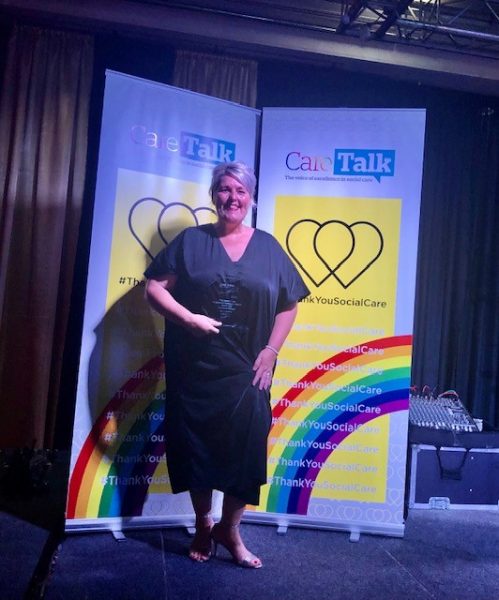
Kerry Parker, Head of Professional Care Services receives her award
We were extremely fortunate to celebrate a win for Kerry Parker in her category and she dedicated the win to her care team saying “this win comes on the back of an exceptional 18 months due to the pandemic. I’d like to dedicate my award to every single member of my team who has made this possible. They have been courageous in the face of Covid and have stood fast with me to support our customers and their families during this testing time. I sincerely thank you all. You truly are what makes EveryDay Care & Support different from other providers”.
Kerry will now go onto the finals of the Great British Care Awards to promote social care in the north east region. We wish her and the other north east representatives the very best of luck in Birmingham on September 25th.
Nominations are now open for the 2021 British Care Awards https://www.care-awards.co.uk/nominate/
We’d welcome your feedback on your own care experience with us and you can do this in a number of ways:
- Contact your care Manager or Team Leader Tel: 0191 2877028
- Speak to our Customer Service Team TeL: 0191 2877028 Option 2
- Visit our listing on Homecare.co.uk
- Look us up on Yell.com
- Take a look at our CQC listing
Dehydration is Dangerous
Drinking enough water is important for everyone, but especially for older adults who are at greater risk for dehydration. The recent heatwave we’ve experienced in North Tyneside and Newcastle has reminded us again of the importance of hydration for those we care for.
Some studies have found that 40% of seniors may be chronically under-hydrated. That can easily lead to dehydration and cause a variety of serious health problems, including urinary tract infections (UTI), falls, kidney stones, and more.
Adults age 65 and up have the highest hospital admission rates for dehydration.
Why dehydration is so common in older adults?
Older adults are more likely to become dehydrated because they naturally have less water in their bodies.
They’re also likely to have health conditions or take medication which could increase their risk of dehydration – like blood pressure medications that flush water from the body.
Additionally, older people:
- Are less sensitive to the feeling of being thirsty
- Have a decreased ability to keep fluid levels in balance in the body
- Have less efficient performing kidney function, which causes urine to contain more water
- Often take medications that cause side effects like diarrhoea or excessive sweating
Symptoms of dehydration in older people
Early dehydration symptoms in older adults often go unrecognised because many of the signs of mild dehydration could easily be caused by other health conditions or medication side effects. It’s far easier to correct mild dehydration than deal with the complications of serious dehydration symptoms. Being familiar with the signs helps you take action sooner rather than later.
Mild dehydration symptoms:
- Dry mouth
- Dark-coloured urine or very small amount of urine
- Fatigue
- Dizziness
- Muscle cramps in limbs
- Headaches
- Feeling weak or unwell
- Being sleepy or irritable
Serious dehydration symptoms
- Low blood pressure
- Confusion
- Difficulty walking
- Fast, but weak pulse
- Bloated stomach
- Wrinkled skin with no elasticity – try the “pinch test”
- Dry and sunken eyes
- Breathing faster than normal
- Severe cramping and muscle contractions in the body
- Convulsions
Health risks of dehydration
For older people being well hydrated is necessary for many medications to work effectively.
Dehydration can also cause serious health problems, including:
- Heat stroke
- Fainting or passing out
- Urinary tract infections (UTI)
- Kidney stones and kidney failure
- Seizures
- Blood clot complications
- Hypovolemic shock – when low blood volume causes a drop in blood pressure and a drop in the amount of oxygen in the body
Dementia
The risk of dehydration is most severe in the advanced stages of dementia due to not recognising thirst, having a complete lack of thirst or being unable to express thirst to others. Increased confusion and/or a change in usual behaviour are the first signs that someone with dementia may be dehydrated.
Benefits of drinking enough water
Aside from avoiding serious health problems, staying well hydrated has its benefits too.
Drinking enough water means:
- Less constipation / reduced need for laxatives
- Fewer falls
- Reduced risk of urinary tract infection
- Men may have reduced risk of bladder cancer
- Reduced risk of colorectal cancer
We’d encourage you to prompt your loved ones to take additional fluids during this warm spell and encourage them to do this very regularly.
Easy Read Health Cards
Our care teams have been working with LD North East and will be supporting the introduction of Health Cards for those who may need additional support.
The Health Cards use Easy Read text and pictures to explain what may happen during a medical or health related appointment. The cards can be used in various health settings to help reduce fears and anxieties, and to help ask and answer questions.
EveryDay Care & Support feels that these simple but effective cards will be extremely beneficial to our customers and specifically those living with a cognitive impairment.
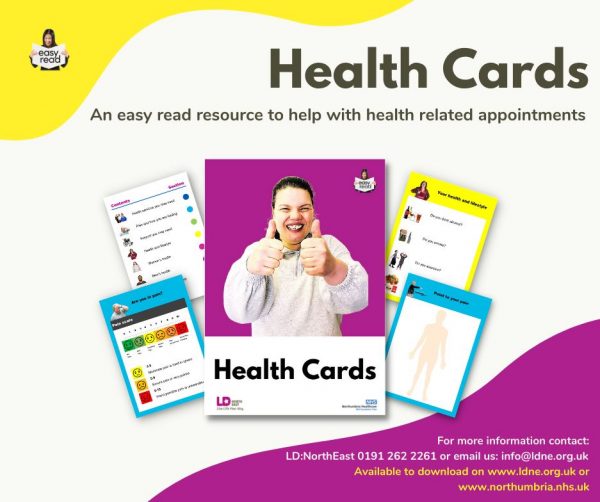
Easy Read Health Cards
All of the cards are colour coded into sections for each health topic.
Sonia Clarke, EveryDay Quality & People Senior Operating Manager said “I’ve been really impressed by the simplicity of this free resource. Our teams will adopt these to assist our customers who may need a little extra support”
You can access free Health Cards here